Audit & signal mapping
Mapped the existing rules engine's false-positive patterns to find which behavioral and network signals the static rules were missing.

Real-time, explainable fraud detection built for a GCC digital bank — cutting false positives 40% while giving analysts a clear reason behind every flag.
 SentryAI Live
The queue compliance analysts see the moment they sign in — sorted by risk, every flag explained.
The existing rules-based fraud engine caught obvious cases but flagged a high volume of legitimate transactions as false positives, and every flag it did raise came with no explanation — compliance analysts had to manually reconstruct why a transaction was blocked before they could act on it.
Replace static fraud rules with real-time, explainable detection compliance teams can act on immediately.
Why one quarter was realistic — the scope was one model and one compliance workflow, not a core-banking rebuild. Here's the breakdown:
Mapped the existing rules engine's false-positive patterns to find which behavioral and network signals the static rules were missing.
Trained the real-time scoring model and validated every flag against analyst-labeled outcomes before it touched a live transaction.
Wired explainable flags directly into the existing compliance tooling — no separate dashboard for analysts to check.
Rolled out alongside the legacy rules engine, then tuned on real analyst clear/escalate decisions during the first weeks live.
The stack behind the real-time explainable-risk layer.
A gradient-boosted scoring model runs on every transaction in under 50ms, paired with a feature-attribution layer that surfaces the exact behavioral and network signals behind each flag — not a black-box number an analyst has to reverse-engineer.
Plus core-banking and case-management integration into the existing compliance stack — the connective work most off-the-shelf fraud tools skip.
The existing rules-based fraud engine caught obvious cases but flagged a high volume of legitimate transactions as false positives, and every flag it did raise came with no explanation — compliance analysts had to manually reconstruct why a transaction was blocked before they could act on it.
We deployed a real-time detection model that scores transactions on behavioral and network signals rather than static rules, with every flag paired to the specific reasons behind it so a compliance analyst can act — or clear a false positive — in seconds instead of escalating.
Transactions are scored on behavioral and network signals as they happen, not in a nightly batch.
Every flag ships with the specific reasons behind it — no black-box scores.
Compliance can clear or escalate in seconds instead of manually reconstructing context.
Detection adapts to emerging fraud patterns rather than relying on static rule sets.
The risk queue compliance analysts use every shift, from sign-in to audit trail.
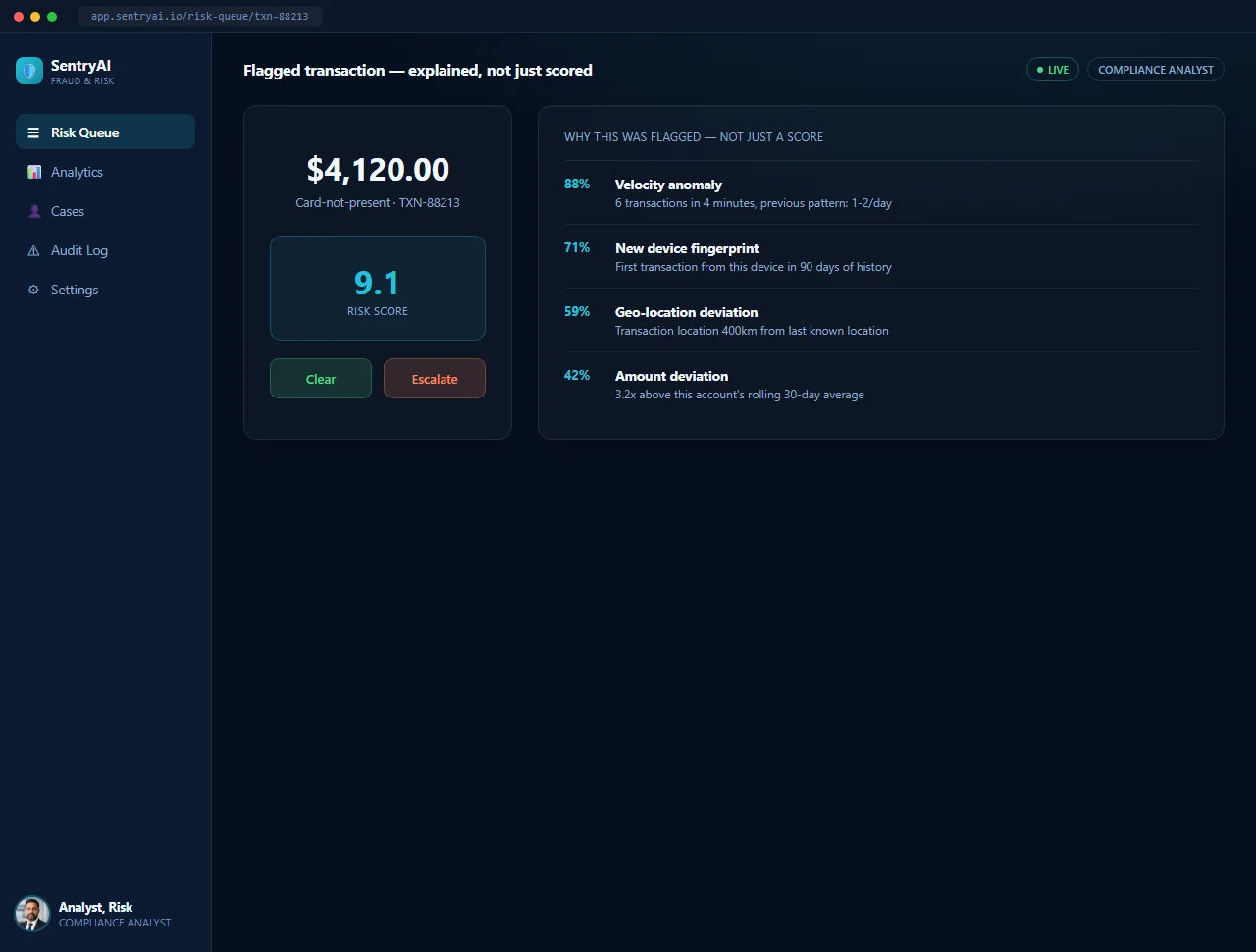
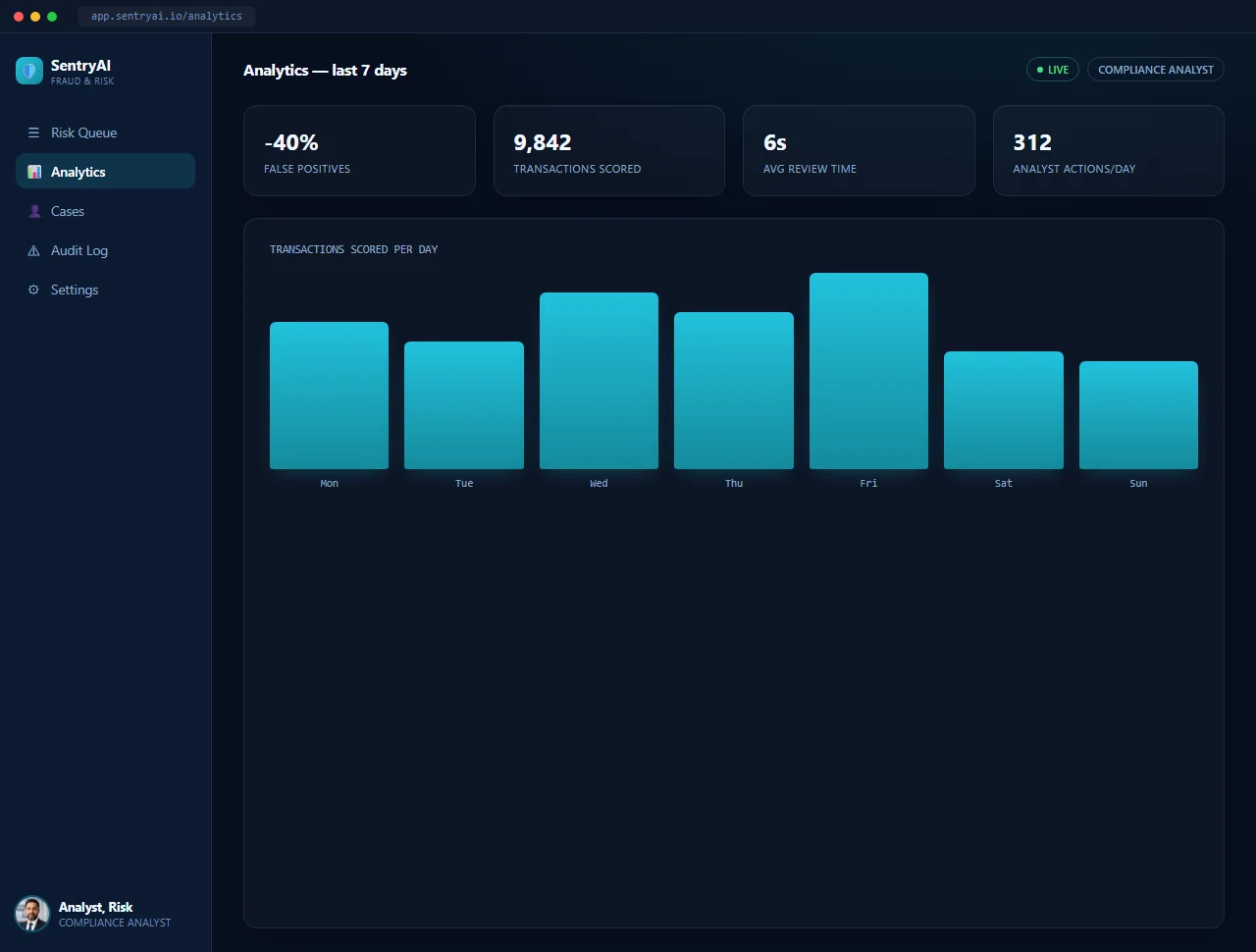
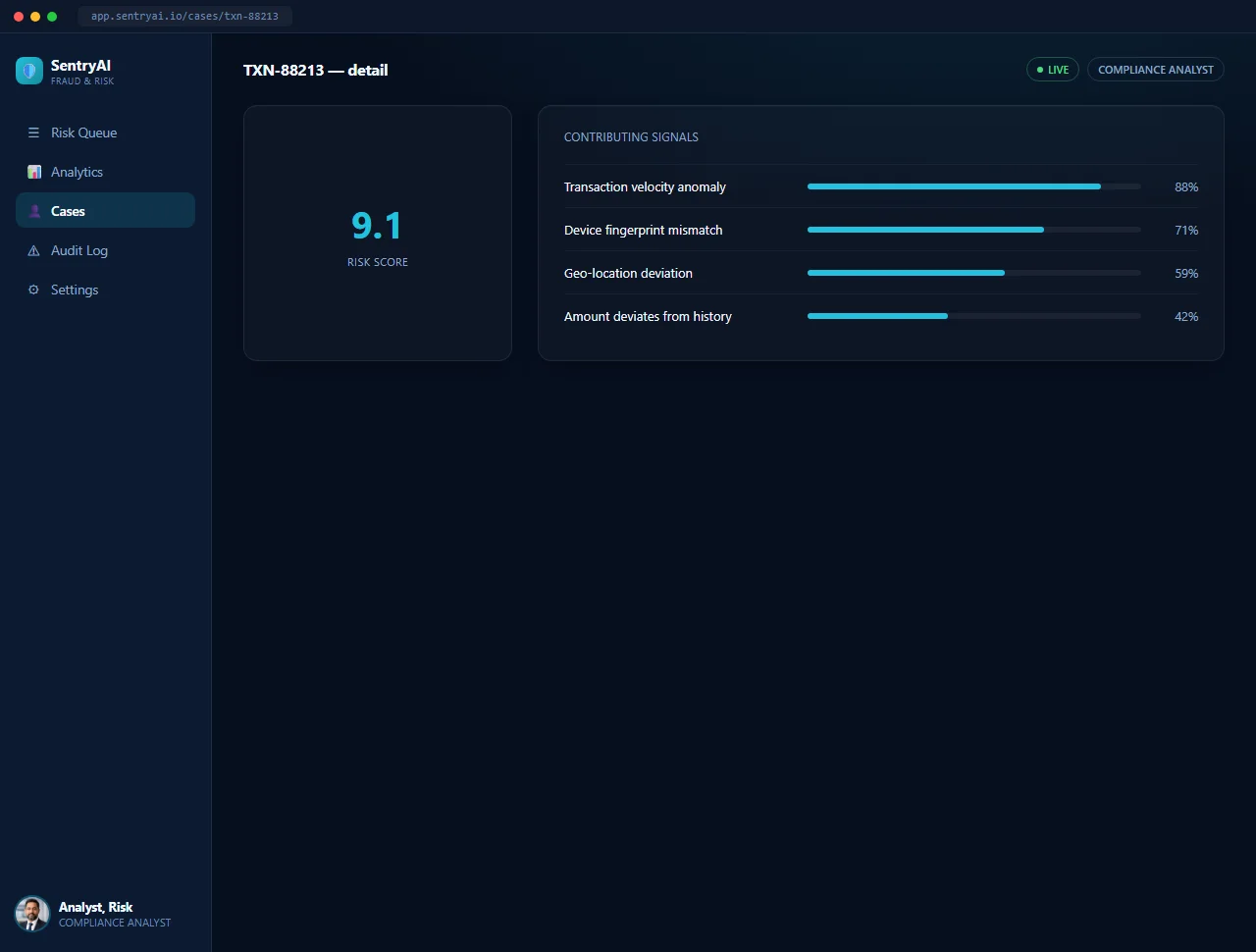
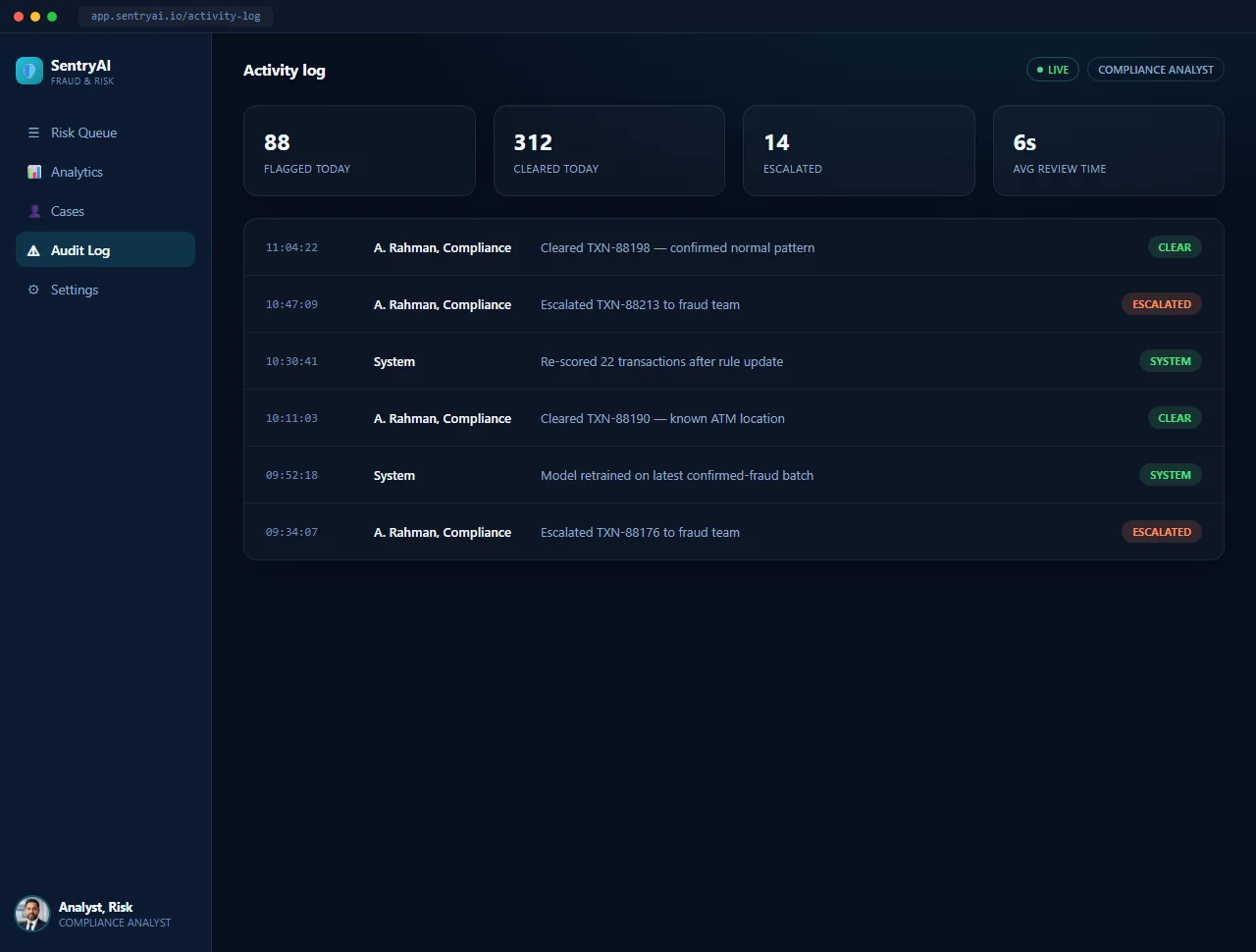
False positives fell 40%, driven as much by faster, more confident analyst action on explainable flags as by the model's raw detection rate.
Straight from the team reviewing flags every day.
“Our old rules engine flagged everything and explained nothing so every case meant an analyst reconstructing the story from scratch before they could clear or escalate it. What Bounce shipped scores transactions in real time and hands us the actual reasons behind a flag — velocity or device or geo or whatever tripped it. That's what changed our review time not just a 'smarter' model.”
 Fatima NoorRisk & Compliance Manager, Financial Services
No — every score is a prioritization and explanation signal. A compliance analyst clears or escalates each flag; the model never freezes an account on its own.
Each score ships with the specific behavioral and network signals that drove it — velocity anomalies, device mismatches, geo deviation — not just a single opaque number.
Live within one quarter, covering the detection model build and the compliance workflow integration — not a pilot running in parallel with the old rules engine.
Detection adapts to emerging patterns rather than relying on a static rule set that has to be manually rewritten every time fraud tactics change.
No — it removes the manual reconstruction work behind every flag, so analysts spend their time acting on real risk instead of reverse-engineering why a transaction was blocked.
Tell us your challenge. We'll come back with a concrete, no-obligation plan and a live demo of what's possible for your team.
50+ enterprise clients across 6+ GCC countries
Reply within 1 business day · No obligation.