Audit & signal mapping
Mapped browsing, cart, and inventory data to find where the static best-seller list was leaving revenue on the table.

A real-time recommendation and demand-forecasting engine that lifted revenue per visit by 29%.
 ShopWave Live
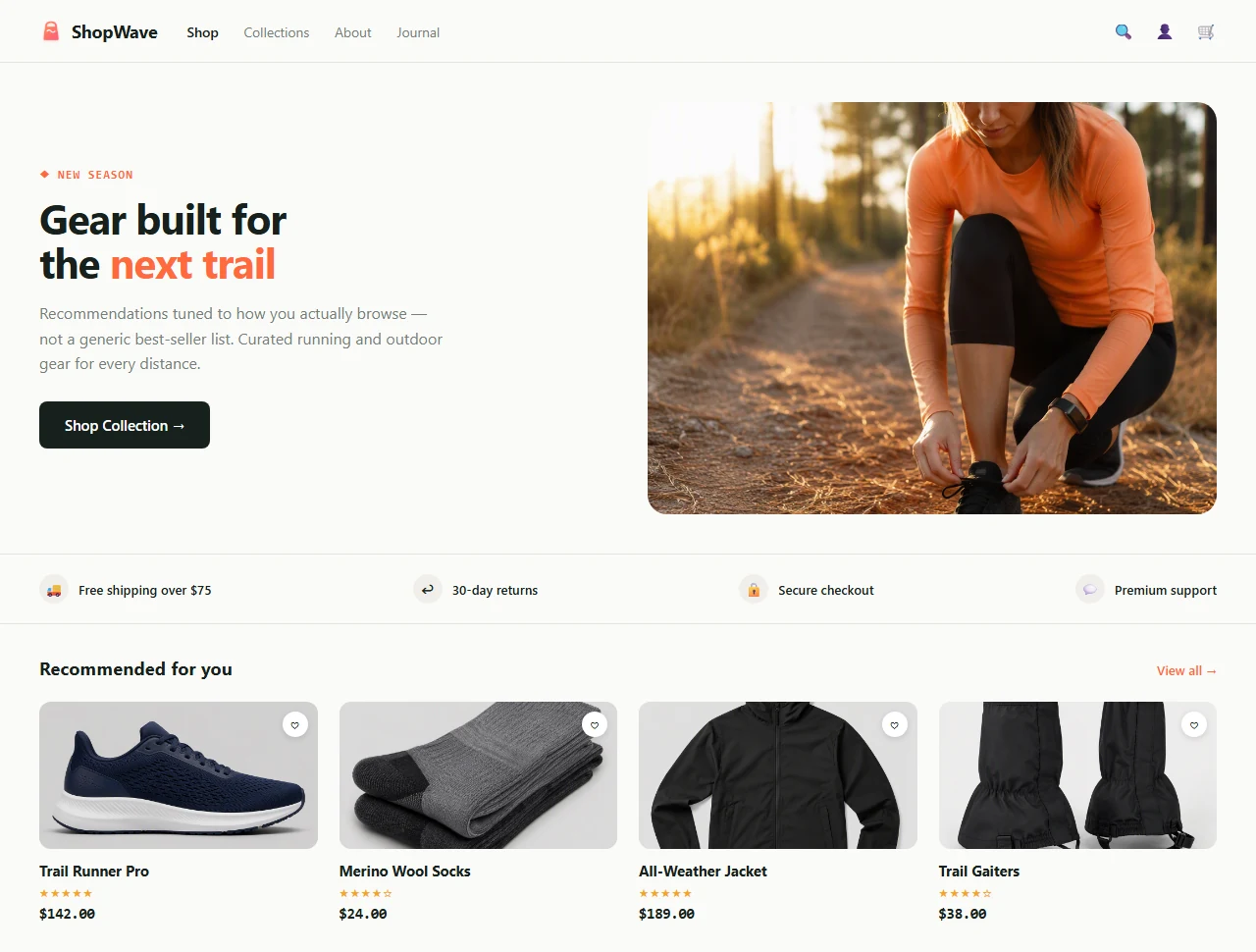
Every session tracked as it browses — recommendations update the moment intent shifts.
Product recommendations were static and rules-based, the same handful of "popular items" shown to every visitor regardless of browsing behavior, while inventory planning ran on historical averages that missed real-time demand shifts.
Replace static best-seller recommendations with session-aware picks backed by real inventory.
Why 14 weeks was realistic — the scope was one recommendation engine and one forecasting layer, not a storefront rebuild. Here's the breakdown:
Mapped browsing, cart, and inventory data to find where the static best-seller list was leaving revenue on the table.
Built the session-aware recommendation model and the demand-forecasting layer that feeds the same signals into inventory planning.
Wired both directly into the existing storefront — no rebuild of the shopping experience itself.
Rolled out across the full catalog, then tuned on real session and conversion data during the first weeks live.
The stack behind ShopWave's real-time recommendation and forecasting layer.
A real-time ranking model re-scores the catalog against each session's live browsing signals, while a separate forecasting model feeds those same signals into inventory planning — so what gets recommended never outruns what can actually ship.
Plus real-time inventory sync feeding the same signals back into merchandising — the connective work most off-the-shelf recsys tools skip.
Product recommendations were static and rules-based, the same handful of "popular items" shown to every visitor regardless of browsing behavior, while inventory planning ran on historical averages that missed real-time demand shifts.
We shipped a real-time recommendation engine that adapts to each session's actual browsing signals, paired with a demand-forecasting layer that feeds those same signals back into inventory planning — so what's recommended and what's in stock move together.
Picks adapt to each visitor's actual browsing behavior, not a fixed best-seller list.
The same signals driving recommendations feed directly into inventory planning.
Recommendations and stock forecasts update live, not on a batch schedule.
Drops into the existing storefront — no rebuild of the shopping experience.
The recommendation engine merchandising uses every day, from sign-in to inventory log.
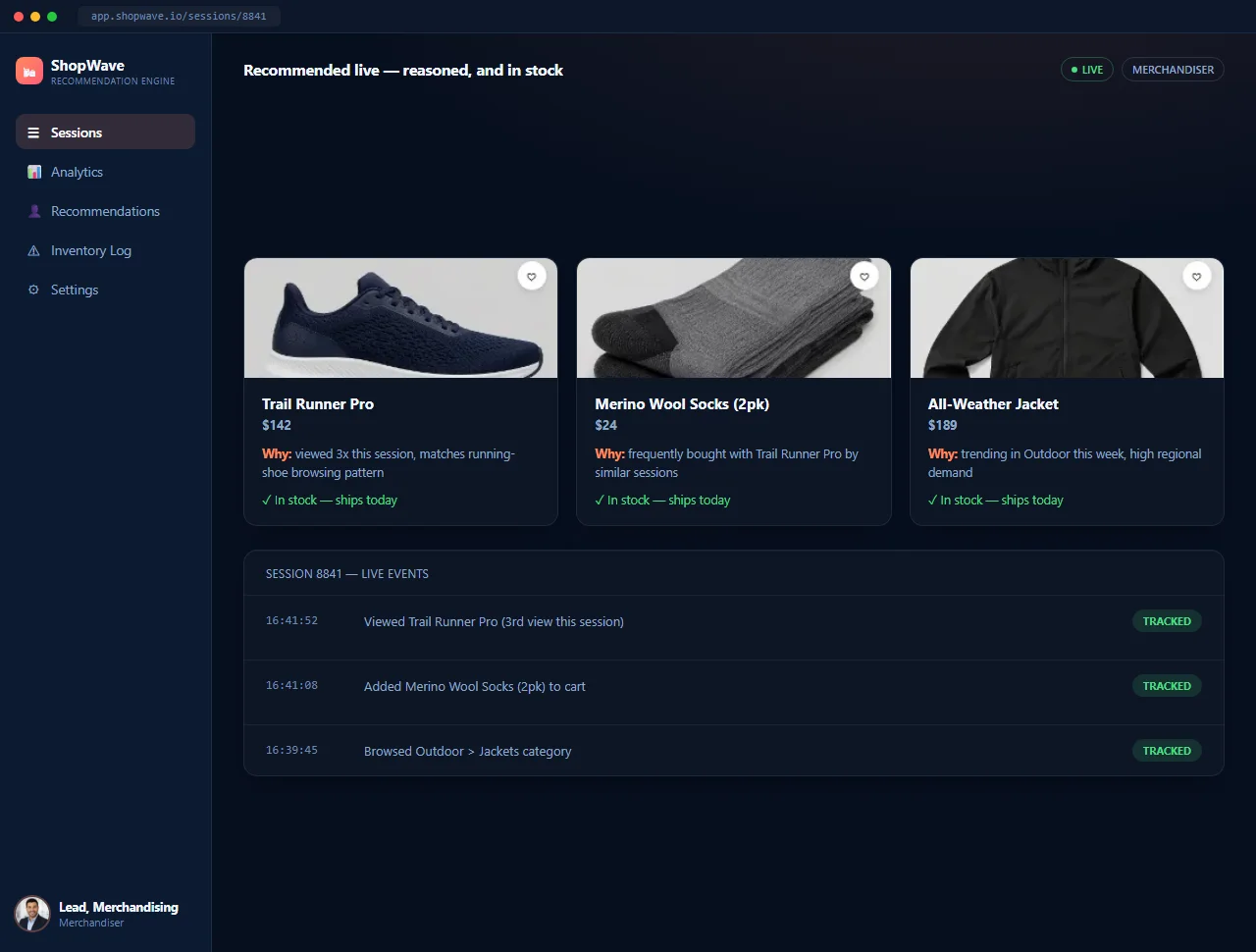
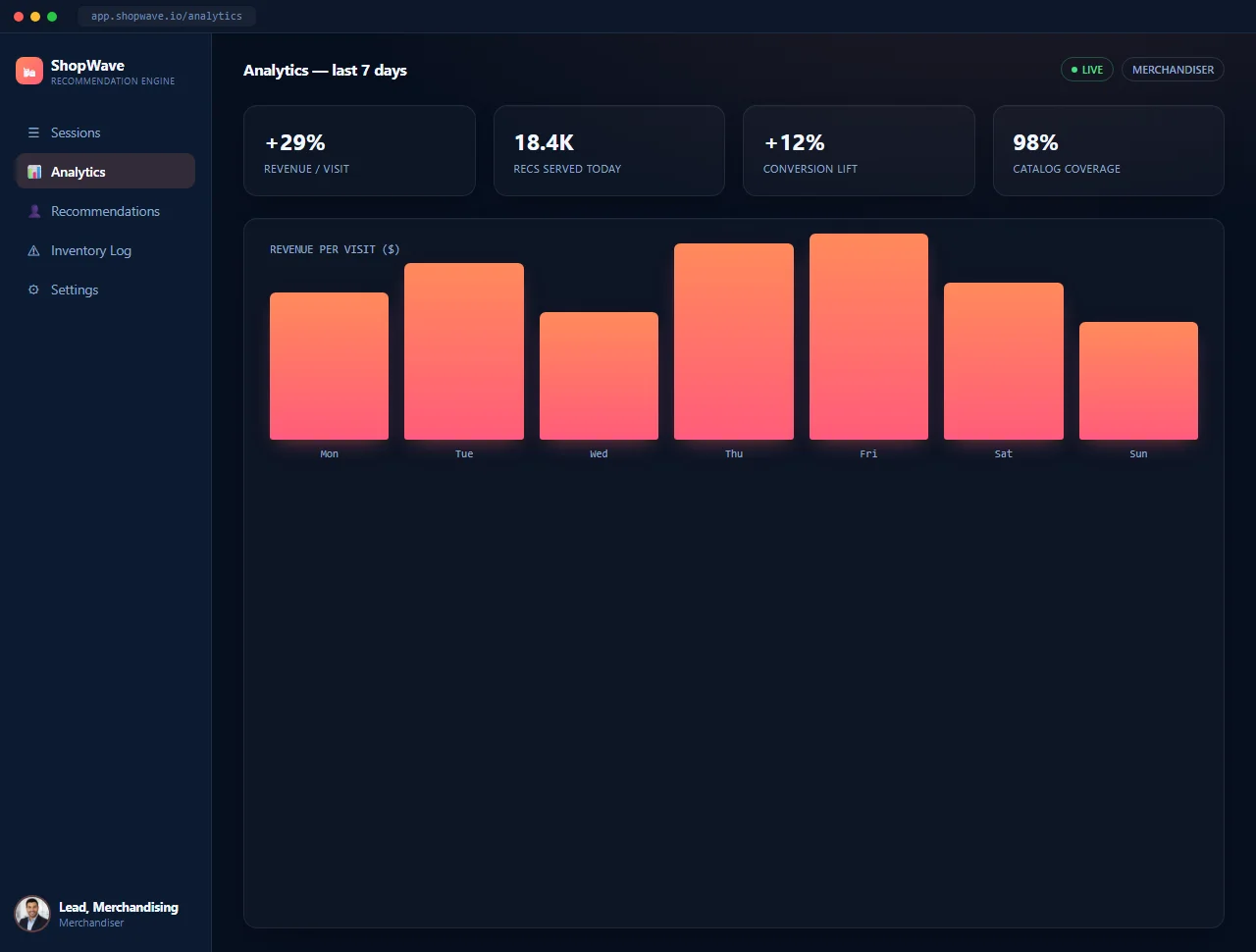
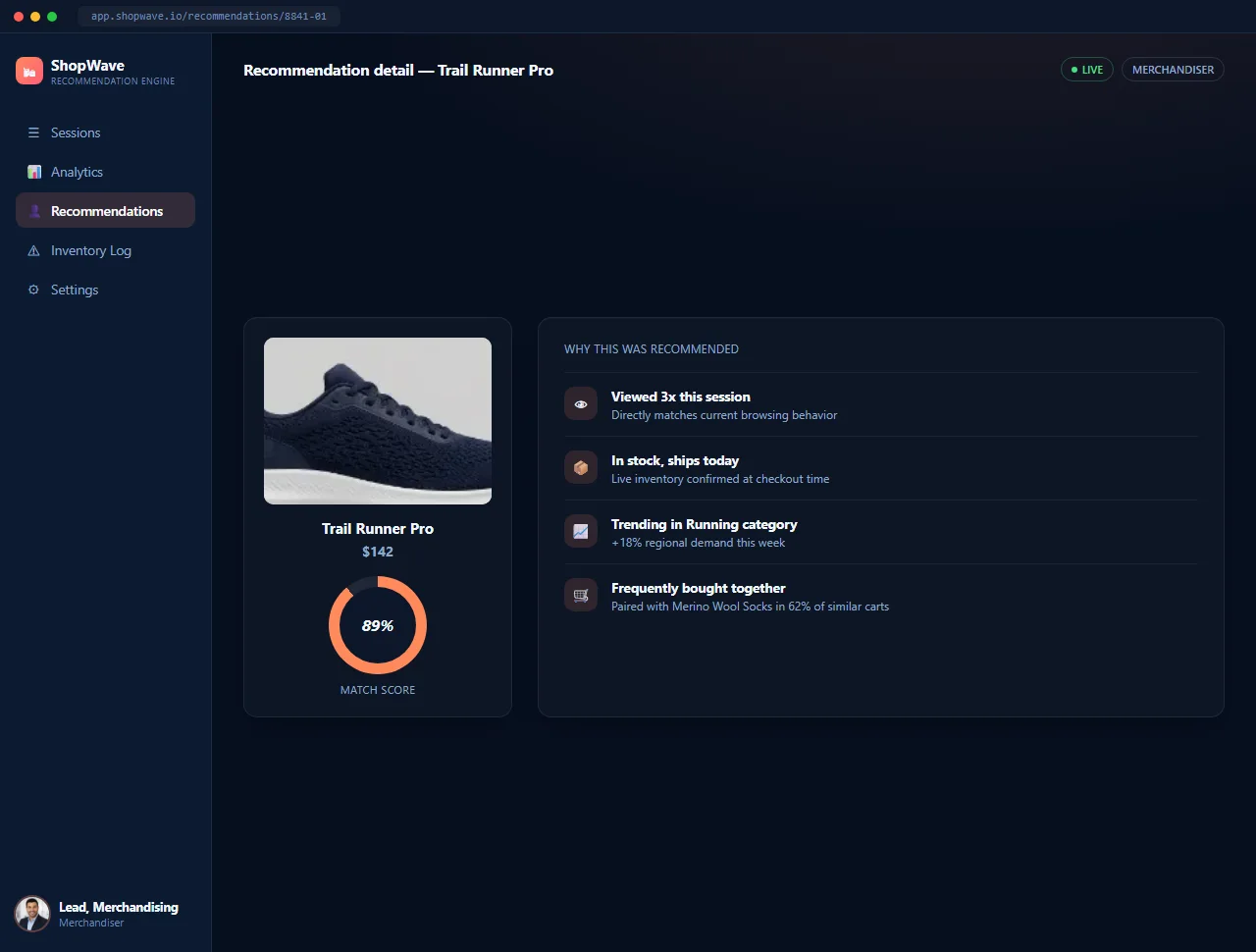
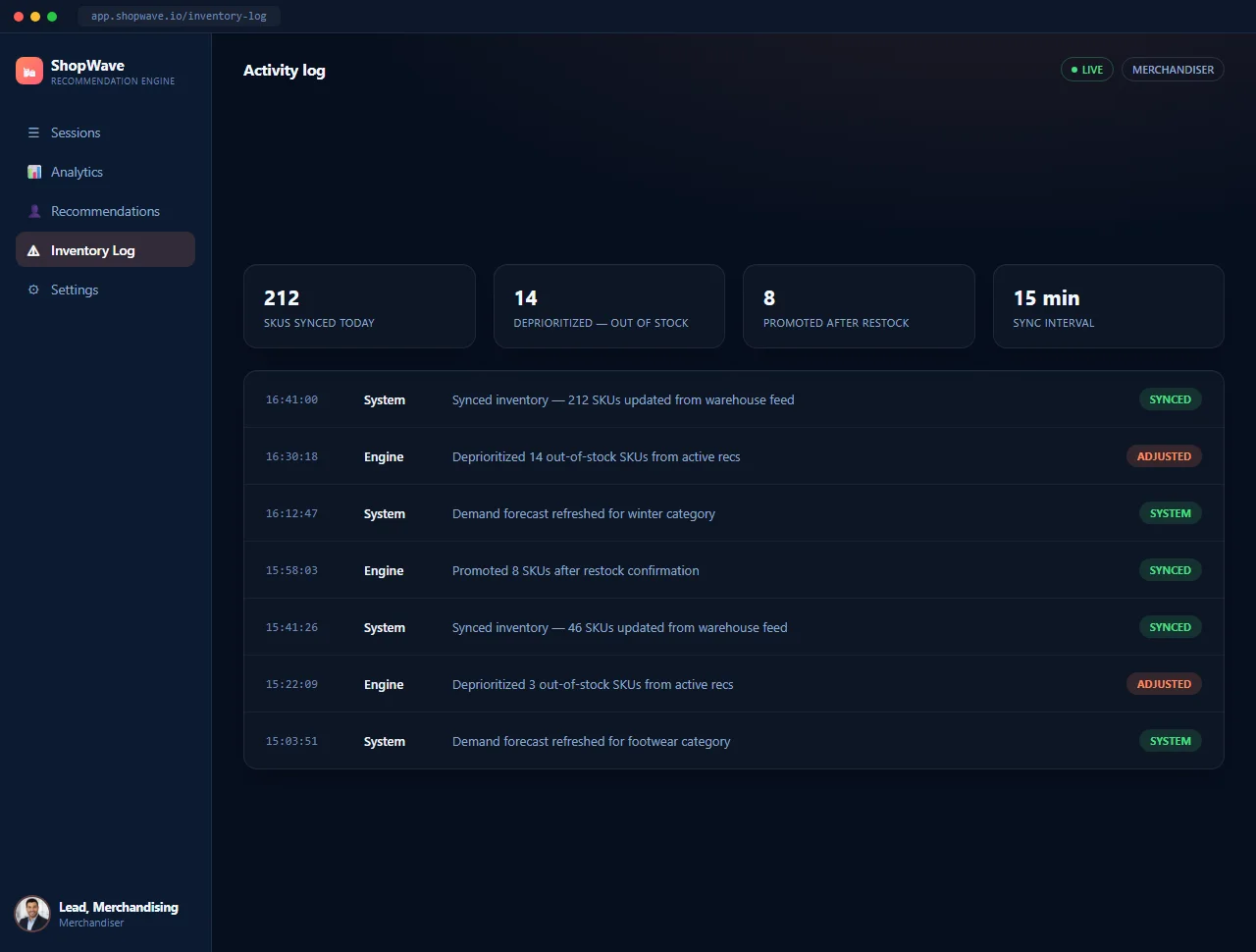
Revenue per visit rose 29% as recommendations shifted from generic best-sellers to session-relevant picks backed by inventory that could actually fulfill them.
Straight from the team running the storefront every day.
“We were recommending the same best-sellers to everyone regardless of what they'd actually clicked on and inventory planning ran on last quarter's averages. Bounce tied recommendations to real session behavior and fed that straight into demand forecasting so what we show someone is also what we can actually ship them. That combination is what moved revenue per visit not a fancier algorithm.”
 Priya NairE-commerce Director, Retail
Yes — the same signals driving recommendations feed directly into inventory planning, so what's suggested and what's fulfillable move together.
In real time, as a session's browsing behavior changes — not on a nightly batch job like the old best-seller list.
No — it drops into the existing storefront. The shopping experience didn't change, only what gets recommended.
14 weeks from kickoff to production, covering the recommendation engine, the demand-forecasting layer, and storefront integration.
Session-relevant picks backed by real inventory, replacing generic best-sellers shown to every visitor regardless of what they were actually browsing.
Tell us your challenge. We'll come back with a concrete, no-obligation plan and a live demo of what's possible for your team.
50+ enterprise clients across 6+ GCC countries
Reply within 1 business day · No obligation.