Data Engineering Services in the UAE: The Foundation Enterprise AI Actually Needs
Enterprises searching for data engineering services in uae are usually further along than they realize. They already know their AI pilot underperformed. They have traced the cause back to the data feeding it, not the model. Gartner puts the average cost of poor data quality at $12.9 million a year per organization. That figure predates the current wave of RAG and agentic systems built directly on internal data, where a broken pipeline does not just skew a dashboard. It produces a model that confidently gives wrong answers. This guide covers what data engineering services actually involve and what to evaluate in a partner before starting an AI initiative.
 By: Asad Siddiq
Why Do Most Enterprise AI Projects Fail on Data, Not Models?

Model selection gets the attention because it is the visible, fast-moving part of any AI project. Data engineering gets skipped because it is slow, unglamorous, and doesn't demo well in a pitch meeting. But a model trained or retrieving from inconsistent, duplicated, or stale data will reproduce those flaws at scale. It will do so with more apparent confidence than a human analyst would. Gartner's research on data quality consistently finds that the $12.9 million average annual cost of poor data quality comes from decisions made on bad data, not from the cost of the bad data itself. That distinction matters more once AI systems are making or recommending those decisions automatically, rather than surfacing them for a human to catch.
What Do Data Engineering Services Actually Include?
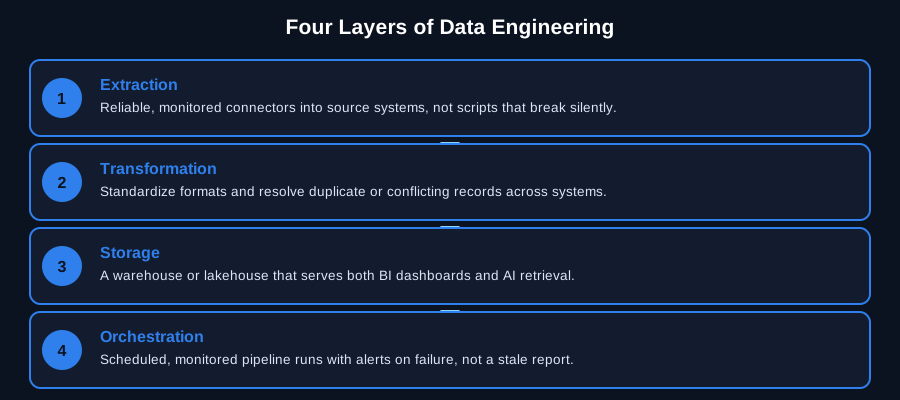
Data engineering is the set of systems that move and shape data before any model or dashboard touches it. In practice this breaks into four layers. Extraction pulls data reliably out of source systems, from core banking platforms to point-of-sale systems to legacy ERPs. Transformation cleans and standardizes formats, and resolves duplicates and inconsistent naming across systems. Storage means choosing and structuring a warehouse or lakehouse that supports both analytics and AI retrieval workloads. Orchestration schedules and monitors the pipelines, so failures get caught before they reach a report or a model, not after.
- Extraction: reliable, monitored connectors into source systems, not one-off scripts that break silently.
- Transformation: standardizing formats, resolving duplicate and conflicting records across systems.
- Storage: a warehouse or lakehouse architecture that serves both BI dashboards and AI retrieval without duplicating pipelines.
- Orchestration: scheduled, monitored pipeline runs with alerting on failure, not discovery weeks later in a stale report.
What Does a Transformation Query Actually Look Like?
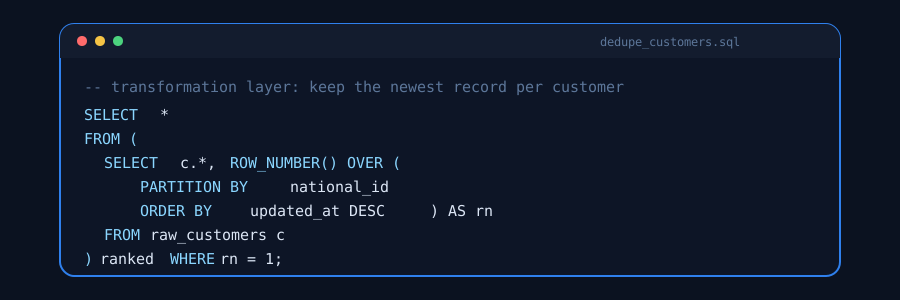
This query keeps only the most recently updated record per national ID, the standard way to collapse duplicate customer entries that arrive from multiple source systems before they ever reach a model or dashboard. Without a step like this, a RAG system indexing customer records will retrieve three conflicting versions of the same person and have no way to know which one is current.
Why Do UAE Enterprises Specifically Underinvest in Data Engineering?
Two regional factors compound the general underinvestment pattern. First, many UAE enterprises, especially in government, banking and real estate, run on a mix of legacy on-prem systems and newer cloud tools. Those were acquired at different times without a unifying data strategy, so extraction alone is harder than in a company built cloud-native from the start. Second, the market's AI adoption curve has moved fast. Many organizations went straight from spreadsheets and BI dashboards to piloting generative AI and RAG systems, skipping the intermediate data-platform investment. The pipeline layer that would normally get built during a data-warehouse project gets skipped entirely. It gets discovered as a gap only once an AI pilot underperforms.
What Extraction Looks Like Against a Legacy Core-Banking or ERP System
Extraction against a modern SaaS tool usually means calling a documented API on a schedule. Extraction against a 15-year-old core-banking platform or ERP often means something closer to reading a nightly export file, validating it did not silently truncate, and reconciling row counts against the source system before anything downstream touches it. UAE enterprises with a long legacy footprint need connectors built for that reality, not a generic integration template built assuming every source has a clean REST API.
What Should You Look for in a Data Engineering Partner?

The single best filter is whether a partner treats data engineering as a standalone deliverable with its own success criteria: pipeline reliability, data freshness, schema consistency. Or do they treat it as a rushed prerequisite step on the way to shipping a model? The second filter is whether they design the pipeline for the AI workloads you actually plan to run. A data engineering foundation built to also serve a RAG system's retrieval needs looks different from one built only for monthly BI reporting. Update frequency, chunking-ready document structure, and metadata retention all differ. Ask any prospective partner to show how they monitor pipeline health in production, not just how they build the initial pipeline. That ongoing operational discipline is what determines whether the foundation still holds a year after launch.
Questions to Ask Before Starting a Data Engineering Engagement
- How do you monitor pipeline health and data freshness in production, not just at initial build?
- Will this pipeline architecture also support the AI/RAG workloads we plan to run, or only current BI reporting?
- How do you handle schema drift when a source system changes without notice?
- What is the plan for legacy on-prem systems that don't have modern API connectors?
How Should a Data Engineering Project Be Sequenced Against an AI Roadmap?
The most common mistake is scoping data engineering as a single, upfront enterprise-wide project before any AI use case is defined. That approach takes months to deliver value. It often builds pipelines around data that turns out not to matter for the AI workload eventually chosen, a version of the scoping risk covered in the real cost of an AI MVP. A tighter sequence works better in practice. Pick the first AI use case, whether that is a RAG system over policy documents, a fraud model, or a forecasting tool. Build the data pipeline that specific use case needs first, and prove it in production. Then expand the pipeline's scope to the next use case from there. This keeps the data engineering investment tied to a use case that is already generating value. It is not a speculative platform build that has to be justified on its own before any AI system exists to consume it.
What Does a Realistic Data Engineering Timeline Look Like?
For a single, well-scoped AI use case, most engagements run six to ten weeks from source-system access to a pipeline in production. That covers connector build, transformation logic, a storage layer sized for the target workload, and orchestration with monitoring wired in from day one. Timelines stretch when a source system lacks documentation, when multiple teams have to agree on which record counts as the source of truth, or when a legacy system needs a custom connector built rather than a standard one. None of these stretch the model-building phase that follows. They stretch the phase before it, which is exactly why scoping the pipeline correctly up front matters more than most AI roadmaps give it credit for.
Consider a logistics company that already has a clean BI warehouse feeding weekly reports. If it starts building a RAG system over maintenance manuals and supplier contracts, the existing warehouse does not help much. Those documents need a different pipeline entirely: text extraction, chunking into retrieval-sized passages, and metadata tagging for source and date. The BI warehouse and the RAG pipeline can share the same underlying storage layer, but they are two different transformation and orchestration jobs, not one pipeline serving both by accident.
What Should a Freshness SLA Actually Specify?
A freshness SLA needs a number, not a description. "Updated regularly" is not a freshness SLA. "Refreshed within four hours of the source system, with an alert if that window is missed" is one. Enterprises that only specify freshness in vague terms discover the gap the same way as everything else here: silently, once a decision gets made on stale data.
What Changes Once a Pipeline Feeds a Production AI System
A pipeline feeding a BI dashboard fails visibly: a stakeholder notices a stale chart and asks about it. A pipeline feeding a production AI system fails silently. The model keeps generating confident answers from outdated or incomplete data. No one notices until a customer or auditor catches the error downstream. That difference is why data engineering for AI needs stricter monitoring and alerting than data engineering for reporting, even when the underlying pipeline technology looks similar on paper. Freshness SLAs, schema-change alerts, and automated data-quality checks that block a broken batch from reaching the model are not optional extras. Not once a pipeline sits underneath something making decisions rather than just displaying numbers.
Frequently asked questions
What is the difference between data engineering and data science?
Data engineering builds and maintains the pipelines that extract, clean, and store data reliably. Data science and AI/ML work consumes that data to build models. Without reliable data engineering, data science work sits on an unstable foundation.
Why do AI projects fail more often on data than on model choice?
A model trained or retrieving from inconsistent, duplicated, or stale data reproduces those flaws at scale and with more apparent confidence than a human reviewer would, and Gartner puts the average cost of poor data quality at $12.9 million a year per organization.
Does a data warehouse built for BI reporting work for AI and RAG systems?
Not automatically. RAG and agentic AI workloads usually need more frequent updates, chunking-ready document structure, and richer metadata than a pipeline built purely for monthly BI dashboards.
How long does a typical data engineering engagement take before AI work can start?
It depends on how many source systems and how much legacy infrastructure is involved, but most engagements are scoped to one target AI use case first, rather than a full enterprise-wide data platform, to get a reliable pipeline live faster.
What does a typical data transformation step actually do?
It standardizes formats and resolves duplicate or conflicting records, often with a query that keeps only the most recently updated row per unique identifier, so a model or RAG system retrieves one current version of a record instead of several conflicting ones.
Can legacy on-premise systems feed a modern data pipeline?
Yes, but extraction against a legacy core-banking platform or ERP usually needs custom connectors and validation steps, since these systems rarely expose a clean, documented API the way modern SaaS tools do.
Want this built for your team?
We ship production-grade AI like this across every industry, in weeks, not months.