
MLOps that keeps your models honest after launch
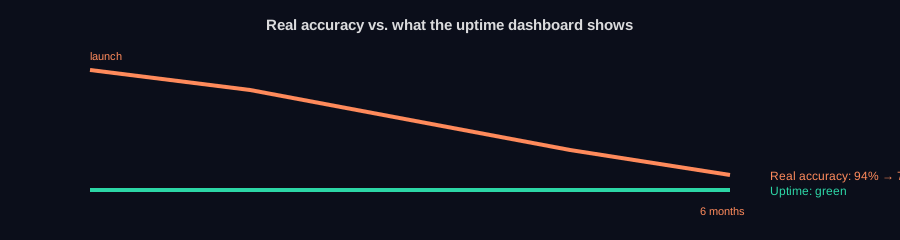
A model that was 94% accurate at launch can quietly slide to 70% six months later while every dashboard still shows green. The world changes, the data changes, and the model doesn't, unless you build the system that keeps it honest.
 By: Asad Siddiq
Shipping a model is the start of its lifecycle, not the end. The teams whose AI stays reliable treat models like any other production service, backed by real MLOps and cloud discipline: monitored, versioned, and reversible.
That distinction matters more in the GCC than the MLOps playbooks written for Silicon Valley suggest. A model trained on last year's transaction patterns, customer language mix, or seasonal demand curve doesn't just get slightly stale here, it can go wrong fast around Ramadan and Eid traffic swings, new bilingual product lines, or a regulator changing a reporting rule mid-quarter. The teams that stay reliable aren't the ones with the fanciest model. They're the ones who built the boring plumbing: monitoring, versioning, rollback, retraining, and a feedback loop, before they needed it.
Why Monitor Inputs and Outputs, Not Just Uptime?
Service health tells you the model responded, not that it responded well. Track the distribution of inputs, the distribution of predictions, and, wherever you can capture ground truth, the actual accuracy. Drift in any of these is your early-warning system. This is the same discipline behind Google's own Rules of Machine Learning: treat monitoring as part of the model, not an afterthought bolted on after launch.
Input Drift: When the World Feeds the Model Something New
Input drift shows up as a shift in what the model is being asked to score: a new customer segment, a product line that didn't exist at training time, a language mix the training data barely covered. It's invisible in an uptime dashboard because the model still answers instantly. Catching it means comparing today's input distribution against the training distribution on a rolling basis, not eyeballing a sample once a quarter.
Prediction Drift: When the Model's Own Answers Start to Shift
Prediction drift is the model's output distribution moving even when nobody touched the model, a sign the relationship between inputs and outcomes it learned no longer matches reality. A fraud model that used to flag 2% of transactions and now flags 6% is telling you something changed, either the world or the model's grip on it, well before a human reviewer notices the pattern.
How Is MLOps Different From Regular DevOps?
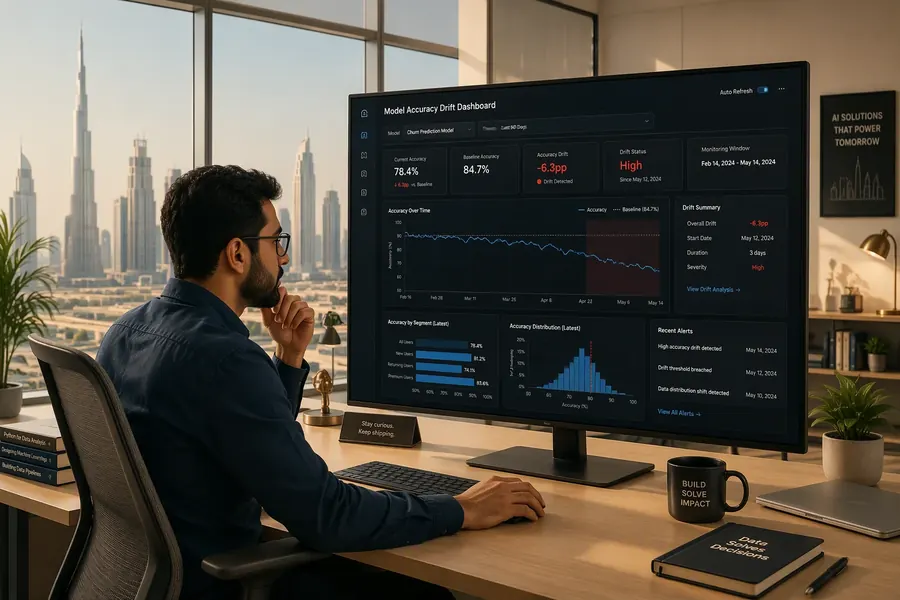
DevOps versions code. MLOps has to version three things that change independently: the model, the data it was trained on, and the features derived from that data. A code deploy is deterministic, the same commit always produces the same binary. A model deploy isn't: retrain the identical pipeline on a slightly different data snapshot and you can get a materially different model. That's why MLOps needs its own release discipline, not a CI/CD pipeline with a bigger artifact.
How Do You Make Every Model Release Reversible?
- Version models, data, and features together so any prediction can be reproduced exactly.
- Roll out with shadow and canary deployments before a model takes full traffic.
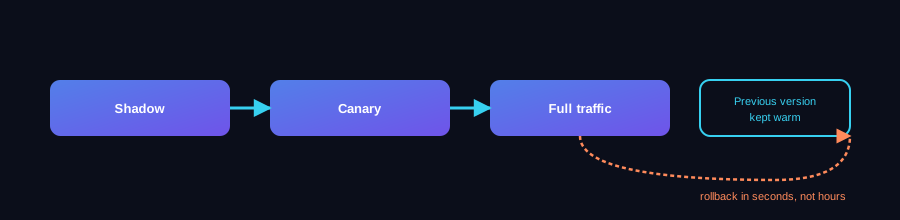
- Keep the previous version warm so a bad release can be rolled back in seconds, not hours.
Shadow and Canary: Testing on Real Traffic Without the Risk
A shadow deployment runs the new model alongside the live one on real traffic, scoring every request but never returning its answer to the user, so you can compare its predictions against the incumbent before it's trusted with anything. A canary then gives the new model a small, real slice of traffic (1-5%) and watches business metrics, not just accuracy, before it earns the rest.
Why the Old Version Has to Stay Warm
A rollback that requires re-provisioning infrastructure or re-loading a cold model isn't a rollback, it's an incident with extra steps. Keeping the previous version warm and one config flip away from serving full traffic is what turns a bad release from an hours-long outage into a seconds-level non-event nobody outside the team even notices.
Why Retrain on Both a Schedule and a Signal?
Retrain both on a cadence and whenever drift crosses a threshold. Automate the pipeline (data validation, training, evaluation against the golden set, and a gated deploy) so refreshing a model is routine rather than a project.
Scheduled Retraining Catches the Slow Drift
A fixed cadence, weekly, monthly, or quarterly depending on how fast the domain moves, catches the slow, unremarkable drift that never crosses an alert threshold on any single day but adds up over a season. It also keeps the retraining pipeline itself exercised and trustworthy, instead of being a dusty script nobody's run since launch.
Signal-Based Retraining Catches the Sudden Shock
A regulator changes a reporting rule, a competitor's pricing move shifts customer behavior overnight, a new product line launches, none of these wait for the calendar. A drift-threshold trigger that kicks off retraining automatically the moment the signal crosses a defined line closes the gap a fixed schedule alone leaves open.
The dangerous failure isn't the model that crashes. It's the one that keeps answering confidently while slowly becoming wrong.
Why Close the Loop With Human Feedback?
Every correction, override, and thumbs-down is a labelled example. Capture it, route it back into a data engineering pipeline built for reuse, and you turn everyday usage into a compounding advantage that competitors can't copy.
Where Feedback Actually Comes From
The richest feedback rarely arrives as an explicit thumbs-down. It's the support agent who overrides a chatbot's answer, the underwriter who reverses a risk score, the ops team member who corrects a flagged transaction back to normal. Instrumenting those override points, not just adding a rating widget nobody clicks, is what actually fills the retraining set.

What Does an MLOps Setup Actually Cost to Run?
Choose lightweight scheduled monitoring plus manual retraining if prediction volume is low and a wrong answer is cheap to fix by hand, the automation isn't worth building yet. Choose full shadow/canary/auto-retrain infrastructure once a model's decisions touch revenue, compliance, or customer trust at real volume, because that's exactly where an unnoticed drift gets expensive fast. Most GCC enterprise teams land somewhere between the two: automated monitoring and alerting from day one (cheap, high-leverage), with canary rollouts and auto-retraining added once the model's blast radius justifies the engineering cost.
Frequently asked questions
Why can a model's accuracy drop even when uptime looks fine?
Uptime only tells you the model responded, not that it responded correctly. Real-world data drifts over time. A model that was 94% accurate at launch can silently slide to 70% while every uptime dashboard still shows green, because uptime and accuracy are different signals.
What should you monitor beyond service uptime?
Track the distribution of inputs, the distribution of predictions, and actual accuracy wherever ground truth is available. Drift in any of these three is an early-warning system for degradation that uptime monitoring alone will never catch.
How do you make a model release safely reversible?
Version models, data, and features together so any prediction can be reproduced exactly, roll out with shadow and canary deployments before full traffic, and keep the previous version warm so a bad release can be rolled back in seconds, not hours.
How often should a production model be retrained?
On both a schedule and a signal: a regular cadence plus immediate retraining whenever drift crosses a defined threshold. Automating the full pipeline (validation, training, evaluation, gated deploy) makes retraining routine instead of a one-off project.
What should happen to human corrections and overrides?
Every correction, override, or thumbs-down is a labelled training example. Capturing it and routing it back into the training set turns everyday usage into a compounding data advantage that's hard for competitors to replicate.
Is MLOps the same as DevOps for machine learning?
No. DevOps versions code, which is deterministic, the same commit always builds the same binary. MLOps has to version model, training data, and features together, because retraining the identical pipeline on a slightly different data snapshot can produce a materially different model.
Want this built for your team?
We ship production-grade AI like this across every industry, in weeks, not months.