
Predictive Maintenance with Computer Vision on the Factory Floor
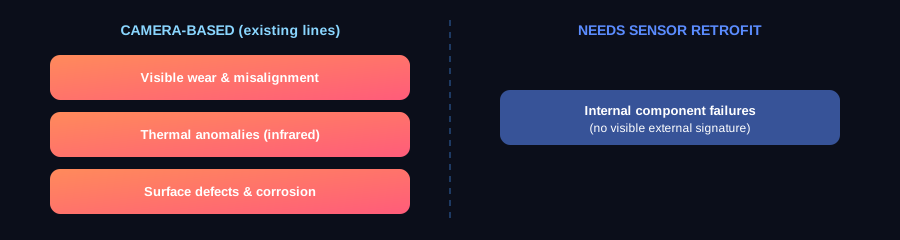
Camera-based predictive maintenance flags visible wear, misalignment, and thermal anomalies on existing production lines without a full sensor retrofit; it catches what a fixed maintenance schedule misses, but it isn't a replacement for sensor data on failure modes that don't show up visually. This guide covers what computer vision can and can't catch, how it connects to broader ML-based forecasting, and how to scope a first pilot.
 By: Asad Siddiq
Unplanned downtime is the single most expensive failure mode on a UAE production floor, and fixed-interval maintenance schedules either replace parts too early or catch failures too late. Computer vision offers a faster path in: cameras already aimed at the line can flag visible wear patterns before a scheduled inspection would catch them.
What Can Computer Vision Actually Catch on a Production Line?
- Visible wear and misalignment on belts, gears, and moving components.
- Thermal anomalies via infrared-capable cameras, flagging overheating before failure.
- Vibration-correlated visual signatures on rotating equipment.
- Surface defects and corrosion patterns that precede structural failure.
Visible Wear Detection in Practice
The model is trained on labeled examples of belt fraying, gear misalignment, and component wear at different severity stages, so it can flag not just that wear exists but roughly how advanced it is, the difference between 'schedule a look at this next week' and 'stop the line now.' That severity grading is what makes the output actionable instead of just another alert.
Thermal Imaging as an Early-Warning Layer
Overheating components often show a thermal signature well before the failure is visible in normal light. A bearing running hot, a motor drawing more current than it should. Infrared-capable cameras layered onto the same vision pipeline catch that signal days or weeks before a visible failure, extending the early-warning window significantly.
Where Does It Fall Short of a Full Sensor Retrofit?
Internal component failures with no visible external signature, bearing degradation deep inside a housing, for instance, need vibration or acoustic sensors, not cameras. Camera-based predictive maintenance is the fast, lower-cost entry point on existing lines; a full sensor retrofit is the deeper investment for failure modes that genuinely need it.
When a Sensor Retrofit Is Actually Worth It
If your downtime history shows a recurring pattern of internal component failures, bearing seizures, internal shaft wear, that never showed a visible external symptom before failing, that's the specific signal a sensor retrofit is worth the investment for. Absent that pattern, camera-based detection captures most of the achievable value at a fraction of the cost.
How Does This Connect to Broader Machine Learning on the Floor?
Visual wear detection feeds the same machine learning pipeline that can eventually forecast remaining useful life on specific components, not just flag current wear. Start with detection, prove the value on one production line, then extend to forecasting once you have a real data history.
From Detection to Remaining-Useful-Life Forecasting
Once you've accumulated a real history of wear-severity readings against actual failure and replacement dates, that data trains a forecasting model that estimates remaining useful life on a specific component, not just its current condition. This is a second-phase capability; it needs real detection history first, which is why starting with detection and proving it out matters before jumping straight to forecasting.
The camera is already pointed at the line. The question is whether anyone's using what it sees.
What Does Implementation Actually Look Like on the Floor?
Camera-based predictive maintenance doesn't require stopping the line to install, it layers onto existing infrastructure with minimal physical disruption, which is a large part of why it's the faster entry point compared to a sensor retrofit.
Training the Model on Your Specific Equipment
Generic wear-detection models trained on stock footage underperform badly on your actual equipment, lighting, and camera angles. A real deployment trains on footage from your own line, including examples of both normal operation and prior wear incidents pulled from maintenance logs where available, so the model learns what wear actually looks like on your specific machines.
Integrating Alerts Into Existing Maintenance Workflows
A flag that lands in a dashboard nobody checks is worthless. Alerts need to route into whatever system your maintenance team already uses, a CMMS ticket, a Slack channel, a work order, so a flagged wear pattern turns into a scheduled inspection, not an ignored notification.
How Should a UAE Manufacturer Start?
Pick one production line with a known, recurring downtime pattern and scope a pilot around catching that specific failure mode early.
What to Audit Before Scoping a Pilot
- Existing camera infrastructure and coverage on the target line, what can be repurposed vs. what needs adding.
- Historical downtime logs for the line, to identify the specific recurring failure mode worth targeting.
- Lighting and camera-angle conditions on the floor, which affect model accuracy more than model choice.
- Who owns acting on a flag once it fires. Maintenance needs a clear response process, not just an alert.
Talk to us about which of your existing camera infrastructure can be repurposed before considering a full sensor retrofit.
What Should a Pilot Timeline Look Like?
A concrete phased plan turns the general advice above into something a plant manager can actually schedule around.
Weeks 1-2: Line Selection and Data Collection Setup
The team selects the target line based on downtime history, audits existing camera coverage and lighting conditions, and begins collecting labeled footage of both normal operation and any available historical wear incidents.
Weeks 3-8: Model Training and Threshold Calibration
The detection model trains on the collected footage and runs in observation mode, flagging wear without triggering any maintenance action yet, while the team compares its flags against manual inspections to calibrate severity thresholds before trusting it to drive real maintenance decisions.
Weeks 9+: Live Alerts Feeding the Maintenance Workflow
Once calibration holds, alerts start flowing into the real maintenance workflow, a CMMS ticket or equivalent, and the team tracks whether flagged issues, once inspected, actually reflected real wear at the severity predicted.
How Does This Change the Maintenance Team's Day-to-Day Work?
The bigger operational shift isn't the technology itself; it's how the maintenance team's time gets reallocated once it's running.
From Fixed-Interval Inspection to Condition-Based Response
Instead of walking every component on a fixed schedule regardless of actual condition, technicians respond to flagged components specifically, freeing time previously spent inspecting equipment that was already fine. That reallocation is usually where the real efficiency gain shows up, separate from the downtime reduction itself.
Building Trust in the System Over the First Few Months
Early flags should be validated against manual inspection consistently, not spot-checked occasionally, until the team has enough confidence in the system's accuracy to act on flags directly. That trust-building period is a real cost worth planning for, not a formality to rush through.
How Does Predictive Maintenance Change Spare-Parts Planning?
Once wear detection is reliable, its value extends beyond avoiding downtime, it starts informing procurement decisions too.
From Fixed Stock Levels to Condition-Informed Ordering
Instead of holding a fixed safety-stock level for every component regardless of actual wear, procurement can order replacement parts based on flagged wear severity across the floor. Reducing tied-up inventory on components that are still in good condition while ensuring parts are on hand before the ones showing real wear actually fail.
A Realistic Timeline for This Second-Order Benefit
Condition-informed procurement isn't a day-one capability; it needs a real history of flagged wear correlated against actual replacement outcomes before the ordering signal is trustworthy. Most manufacturers see this benefit emerge naturally in the 6-12 months after detection is running reliably, not as something to plan around from the start.
Who Should Own This Handoff Between Maintenance and Procurement
The wear-severity data is only useful to procurement if someone owns translating it into an actual ordering signal, that usually means a defined handoff process between the maintenance team generating the flags and whoever manages parts inventory, not an assumption that the data will get used automatically once it exists.
Measuring the Inventory Impact Separately From Downtime Impact
Track reduced safety-stock spend as its own line item, distinct from downtime-avoidance savings. Reporting them together tends to understate how much of the total return actually comes from tighter, condition-informed procurement rather than just fewer unplanned stoppages.
Frequently asked questions
Does predictive maintenance always require new sensors?
No. Camera-based computer vision can catch visible wear, misalignment, and thermal anomalies using cameras already installed on the line, without a full sensor retrofit.
What failure modes can computer vision not catch?
Internal component failures with no visible external signature, like deep bearing degradation, need vibration or acoustic sensors rather than cameras.
How much downtime reduction can predictive maintenance realistically deliver?
It depends entirely on the specific failure mode and how visible its early signals are; the right first step is scoping a pilot around one known, recurring downtime pattern rather than estimating a blanket number.
Can existing factory cameras be reused for predictive maintenance?
Often, yes, repurposing camera infrastructure already aimed at the production line is typically the fastest and lowest-cost way to start.
Is predictive maintenance worth it for a single production line, or only a full factory rollout?
It's worth starting on a single line with a known downtime pattern. Proving value there before expanding is lower-risk than a factory-wide rollout on day one.
Want this built for your team?
We ship production-grade AI like this across every industry, in weeks, not months.